Loading...
Serving East Honolulu, HI and surrounding areas. (808) 809-8779
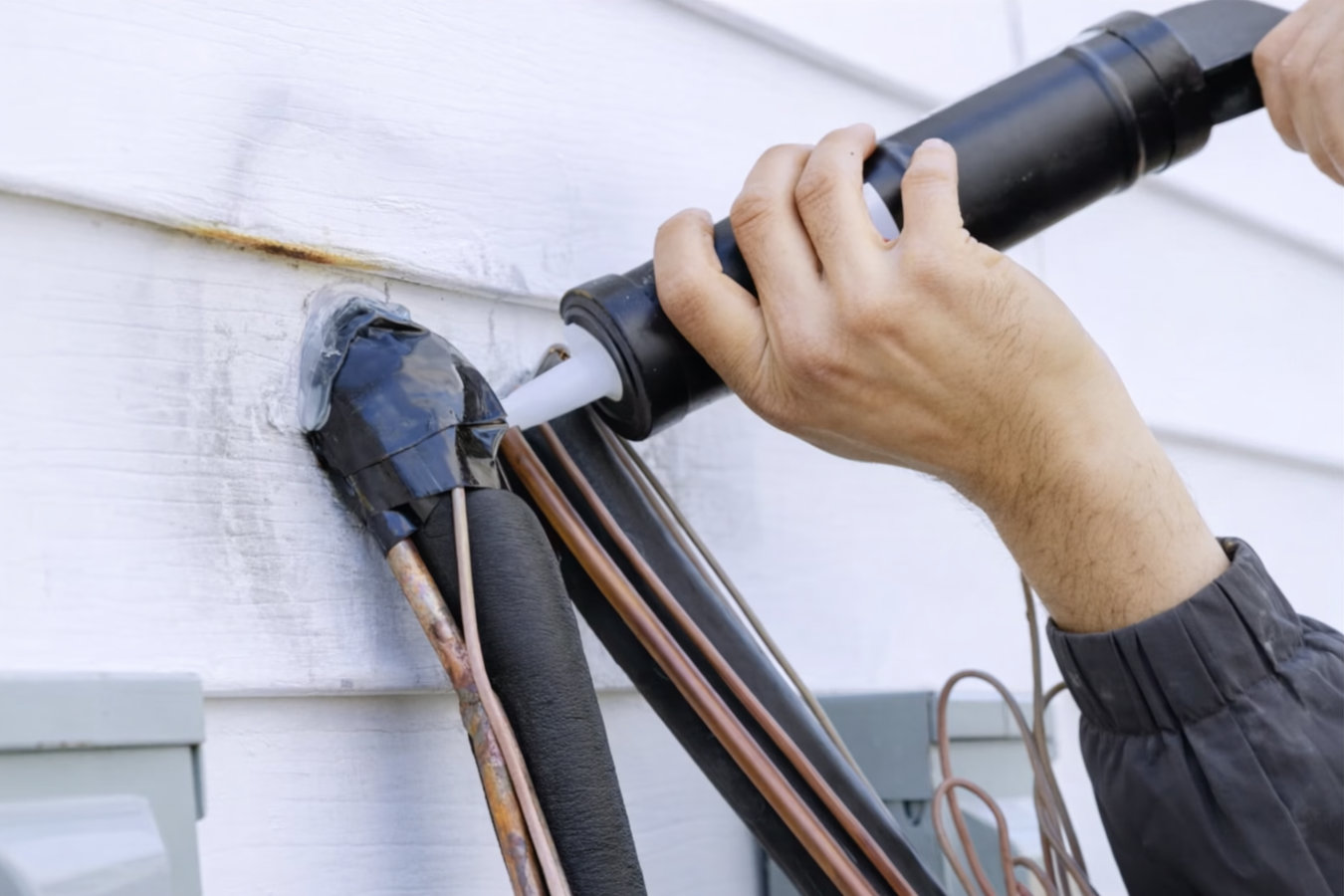
Gaps in your home let humid outdoor air in and cooled air out all day long. We find every one of them, seal them permanently, and show you the proof with before-and-after testing.
Air sealing services in East Honolulu find and permanently close every gap, crack, and opening in your home's walls, ceilings, and floors where outside air sneaks in - most jobs take one to two days and produce a measurable, documented improvement you can verify. A contractor uses caulk and spray foam to seal around light fixtures, plumbing pipes, attic hatches, and utility penetrations, then tests the results with a blower door to confirm the work made a real difference.
In East Honolulu, air sealing is not about keeping winter cold out - there is no winter cold. It is about keeping warm, humid outdoor air from pushing into your cooled living space all year long. Even a home that looks well-maintained from outside can lose a surprising amount of cooled air through tiny gaps, making your AC work harder every single day. Many homes in Hawaii Kai, Aina Haina, and Kuliouou were built before 1980 with open eaves and jalousie windows - construction styles that were never designed to be airtight.
Air sealing and attic air sealing work best together - closing ceiling penetrations and attic bypasses alongside the wall and floor gaps gives your whole home a tighter envelope and multiplies the benefit of any insulation already in place.
If your Hawaiian Electric bill has been climbing year over year and your habits have not changed, air leakage is a likely culprit. In East Honolulu, where electricity already costs more than almost anywhere in the country, even moderate leakage can add hundreds of dollars to your annual bill. This is one of the clearest signs your home's envelope is not doing its job.
If certain rooms feel stuffy or warm no matter how long the AC runs, those rooms likely have air leaks pulling in warm outdoor air faster than your system can cool it. This is especially common in East Honolulu homes with older attic construction, where heat builds up overhead and seeps down through gaps in the ceiling. A bigger AC is not the answer - closing those gaps is.
East Honolulu's coastal humidity means any gap in your home's envelope is also a pathway for moist air to enter. When warm, humid outdoor air meets your cooled interior surfaces, it can condense inside walls and ceilings. If you notice musty odors, water stains, or discoloration that does not go away, air leaks may be letting moisture build up where you cannot see it.
Hold your hand near an interior wall outlet or light switch on a warm, breezy day. If you feel air movement, that outlet is connected to a gap in the wall cavity that leads outside. This is a simple test any homeowner can do, and it is one of the most common sources of air leakage in older East Honolulu homes built before 1980.
We start every air sealing job with a blower door test - a temporary fan mounted in your doorway that measures exactly how much air your home is leaking. That test gives us a map of where the gaps are, so we seal the right places rather than guessing. Small cracks get caulk; larger gaps around pipes, wires, and attic bypasses get spray foam. Materials are chosen for coastal Oahu conditions - products rated for high humidity and salt-air exposure that will not crack or shrink within a few years. When sealing is complete, we run the blower door test a second time to document the improvement in writing.
Air sealing is most effective when combined with insulation. We regularly pair it with basement insulation for homes with raised foundations, and with attic air sealing to address the ceiling plane where heat and moisture move most aggressively. We are also familiar with Hawaii Energy's rebate program and handle the documentation requirements as part of the job so you do not miss the savings you are entitled to.
Closing all identified gaps throughout attics, walls, and utility areas for the most complete result.
Before-and-after measurement that gives you documented proof the work improved your home.
Targeting the ceiling penetrations and bypasses where heat and moisture move most aggressively.
Handling rebate documentation at the time of the job so you receive the savings without extra paperwork.
Hawaii consistently has the highest residential electricity rates in the United States - often several times the national average. That fundamentally changes the return on investment for air sealing. A reduction in cooling costs that might save a mainland homeowner $100 a year can save an East Honolulu homeowner significantly more for the same amount of work. Homes in neighborhoods like Hawaii Kai, Aina Haina, and Kuliouou were built during the post-war era, often with open eaves and construction techniques that were never designed with a sealed envelope in mind. Those same features that kept homes cool naturally before air conditioning was common are now a liability when you are paying to cool the air inside. ENERGY STAR guidance on sealing and insulating explains why air sealing is one of the most cost-effective home improvements available to homeowners in warm, humid climates.
The salt air and coastal humidity in East Honolulu also mean that sealing materials need to be chosen carefully. Caulk and foam that hold up well in a dry inland environment may degrade faster here - which is why asking about material suitability for coastal conditions is one of the most important questions you can put to a contractor. Homeowners across Honolulu and East Honolulu deal with these conditions year-round, and the right product choice makes a real difference in how long the work holds up.
We respond within 1 business day and ask a few basic questions - home age, comfort issues you have noticed, and whether you are interested in Hawaii Energy rebates. We schedule a free in-home assessment with no commitment required.
We run a blower door test to measure your home's current air leakage rate and walk through the results with you in plain language. You will see a written estimate that covers the specific gaps we found and the cost to seal them.
Most of the work happens in your attic and around utility penetrations, not in your living spaces. The crew seals gaps systematically with caulk and foam. For a standard East Honolulu home, the work typically takes one to two days.
We run the blower door test a second time to document the improvement. You receive a written summary showing the before-and-after numbers - which you will need if you are filing for a Hawaii Energy rebate and which confirms the work was done correctly.
Free estimate, blower door test included. We show you the numbers before any work begins.
(808) 809-8779We run a blower door test before we start and again when we finish. That gives you a documented number showing the improvement - not just our word that the work made a difference. If you are applying for a Hawaii Energy rebate, that documentation is required and we have it ready.
Salt air and year-round humidity in East Honolulu degrade standard caulk and foam faster than in dry inland areas. We use materials suited for coastal Oahu conditions - products that hold up to the environment your home actually lives in rather than materials designed for a dry-climate market.
We work throughout East Honolulu and across Oahu - from Hawaii Kai and Aina Haina to Pearl City, Kaneohe, and Kapolei. Local availability means faster scheduling, and crews who know the construction patterns common to each area of the island.
The rebate process has specific steps that have to happen in the right order - contractor approval must be confirmed before work begins, not after. We handle that verification and the paperwork as part of every qualifying job. Hawaii Energy rebate program details are available if you want to review eligibility before calling.
Air sealing done right is one of the highest-return improvements an East Honolulu homeowner can make - and we have the test results to prove it.
Insulate the foundation level of your home to address heat gain and moisture from the ground up.
Learn moreTarget the ceiling plane specifically - where bypasses around lights and pipes let the most air and heat through.
Learn moreHawaii Energy rebates require contractor pre-approval before work begins - call today so you do not miss out on savings that are already available to you.