Loading...
Serving East Honolulu, HI and surrounding areas. (808) 809-8779
Closed-cell spray foam seals air leaks and resists coastal moisture in a single application - no settling, no sagging, and no repeat visits needed for decades.
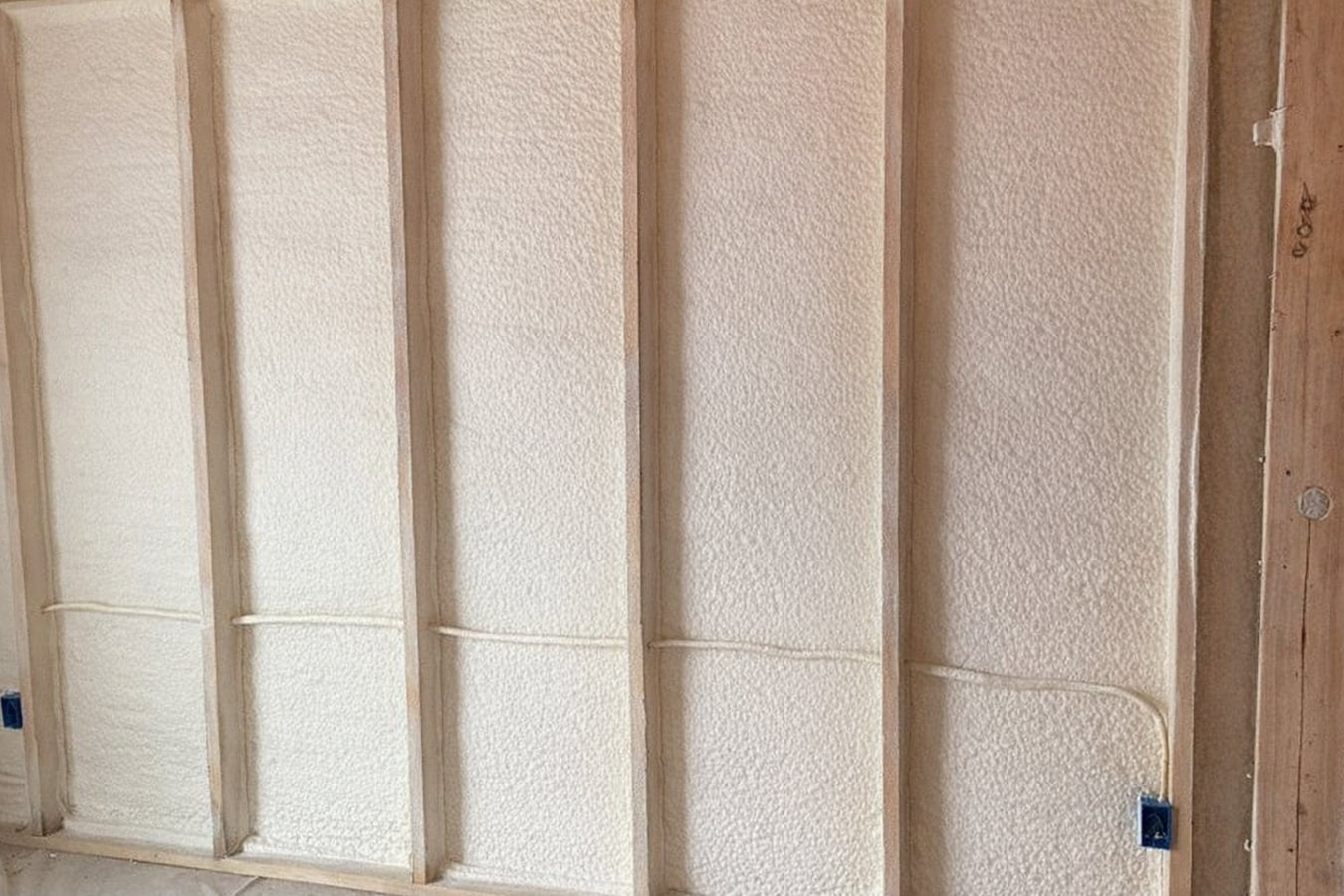
Closed-cell foam insulation in East Honolulu is sprayed as a liquid and hardens into a dense, rigid layer that seals gaps and blocks heat at the same time - most single-area residential jobs are completed in one day. Unlike fiberglass batts, it bonds directly to the surface, does not settle or sag, and resists moisture absorption even in Hawaii's salt-air, high-humidity environment.
In East Honolulu, where your air conditioner runs year-round and Hawaii has some of the highest electricity rates in the country, every gap in your home's thermal envelope costs you money every month. Many homes in neighborhoods like Aina Haina, Hawaii Kai, and Kuliouou were built in the 1950s through 1970s with little or no wall and attic insulation - spray foam is one of the most effective ways to bring those older homes up to modern performance without a major renovation. Pairing spray foam with open-cell foam insulation in the right spaces lets you match the best material to each part of your home.
The Spray Polyurethane Foam Alliance publishes installation standards and homeowner guidance for spray foam work. A contractor following those standards will measure foam thickness during application and give you documentation you can keep.
If your Hawaiian Electric bill has been rising year over year and you have not changed your habits or added appliances, poor insulation is one of the most common culprits. When conditioned air escapes through gaps in your walls, attic, or crawl space, your AC unit has to run harder and longer. This is one of the clearest signals that your home's thermal envelope needs attention.
If one bedroom or the top floor is noticeably hotter than the rest of the house - especially in the afternoon when the sun hits the roof - that is a strong signal the attic above is not properly insulated or sealed. In East Honolulu, where the sun is intense and rooftops absorb significant heat, an under-insulated attic makes upper-floor rooms genuinely uncomfortable even with the AC running.
East Honolulu's coastal air carries a lot of moisture. If your home's insulation has been absorbing that moisture over the years, you may notice a faint musty smell in certain rooms or closets - especially in homes built before the 1980s. This can mean existing insulation has become damp and is no longer working properly, and in some cases it is the early sign of a mold problem inside the wall cavity.
Many homes in neighborhoods like Aina Haina, Kuliouou, and Hawaii Kai were built in the 1950s and 1960s with little or no wall and attic insulation. If you have lived in your home for years and cannot recall any insulation upgrade, there is a good chance the original material has degraded significantly. A quick look in your attic - bare rafters, thin dusty batts, or nothing at all - tells you a lot.
We install closed-cell spray foam in attics, crawl spaces, basement walls, and wall cavities for both new construction and existing homes. Every job starts with an on-site assessment where we check the current condition of any existing insulation, look for moisture or mold that needs to be addressed first, and measure the area accurately. You receive a written estimate that breaks down the space being covered, the thickness of foam being applied, and the total cost - not just a ballpark number. Thickness matters with spray foam - foam applied too thin will not deliver the performance you paid for, and we measure as we go to confirm it.
For most projects in East Honolulu that change your home's thermal envelope, we pull a building permit from the City and County of Honolulu and coordinate the final inspection. That inspection is an independent review of the work - not just our word that the job was done correctly. We also handle jobs where open-cell foam insulation is the better fit for a specific space - different areas of the same home sometimes call for different materials, and we will tell you which is which rather than defaulting to one option for everything.
Ideal for East Honolulu attics where sealing the roof deck stops heat and moisture at the source rather than just slowing it down.
Best for lower levels in coastal homes where moisture resistance is as important as thermal performance.
Suited to older homes where original insulation has degraded or was never installed, delivered with minimal disruption to finished walls.
Every qualifying project includes permit management and city inspection coordination so you have documented proof the job was done to code.
East Honolulu sits on the southeastern coast of Oahu where warm, humid air blows in year-round and salt from the ocean is a constant presence. That environment is hard on older insulation materials - fiberglass batts absorb moisture over time and lose effectiveness, while salt-laden air accelerates wear on any material with gaps in coverage. Closed-cell foam does not absorb water and bonds tightly to surfaces, which makes it a better long-term fit here than many alternatives. Homes in neighborhoods like Hawaii Kai and Kuliouou that sit close to the water face the most aggressive coastal conditions, and spray foam handles those conditions better than anything else we install. Homeowners in East Honolulu can also review energy efficiency resources through the Hawaii State Energy Office.
The housing stock in East Honolulu compounds the opportunity. A large share of homes in areas like Honolulu and East Honolulu were built during the post-war decades when insulation was either minimal or completely absent. For those homes, switching from degraded fiberglass to closed-cell foam is not a marginal improvement - it is a complete transformation in how the home handles heat and moisture. Because Hawaii's electricity rates are among the highest in the country, the payback on that investment comes faster here than almost anywhere else.
We respond within 1 business day. We will ask a few basic questions - which areas of the home you want insulated, whether any work has been done before, and what prompted the call. No cost or commitment at this stage.
We visit your home, check existing insulation, look for moisture or mold that needs addressing first, and measure the area accurately. You get a written estimate that breaks down the area, foam thickness, and total cost - not a rough number.
For most projects in East Honolulu that affect your thermal envelope, we pull a building permit from the City and County of Honolulu. We handle the paperwork - you do not need to visit the permit office. Permitting typically adds a few days to a few weeks to the timeline.
The crew arrives, clears the work area, and sprays foam in layers up to the target thickness. Most single-area jobs finish in a day. After curing, we walk through the finished work with you and coordinate the city inspection if required.
Free assessment, no obligation. We respond within 1 business day and handle the full permit process on your behalf.
(808) 809-8779We work exclusively in Hawaii's hot, humid climate - not with a mainland spec sheet. The materials and application methods we use are selected for East Honolulu's salt air, high humidity, and year-round heat, not for a dry climate where different rules apply.
We serve all 12 communities in our service territory, from Hawaii Kai to Kapolei. Working across Oahu's varied microclimates means we understand how insulation needs differ block by block - not just island-wide. That local knowledge shapes every recommendation we make.
Spray foam applied too thin will not deliver the performance you paid for. We measure foam thickness during application and document the results so you have written confirmation the job meets specifications - not just an invoice with a total.
We pull permits and coordinate city inspections for every qualifying project. That inspection is an independent review of the finished work. You are not relying solely on the contractor's word - you have a documented record that the job was done to local code standards.
Spray foam is a one-time investment when done correctly - it does not settle, degrade, or need to be redone. Choosing a contractor who knows Hawaii's climate and follows the permit process protects that investment from day one.
A lighter, more flexible spray foam option suited to interior walls and spaces where sound control is as important as thermal performance.
Learn moreLearn more about spray foam insulation in general and how both closed- and open-cell options fit into a complete home insulation strategy.
Learn moreEast Honolulu's heat and humidity work against your home every day - closed-cell foam stops that at the source. Get your free estimate now and let us handle the permit process from start to finish.