
Loading...
Serving East Honolulu, HI and surrounding areas. (808) 809-8779
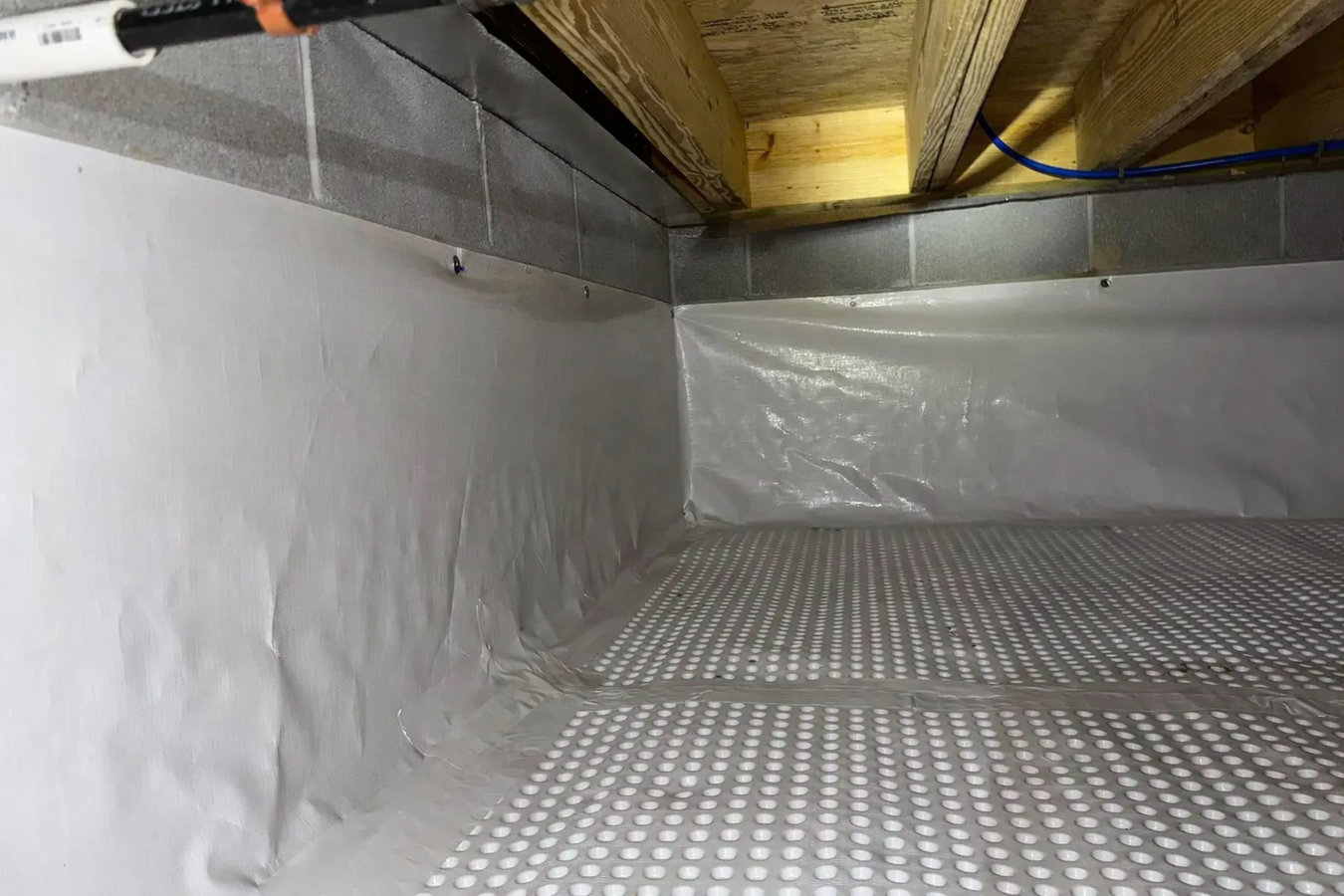
What happens under your floors affects every room above them. We insulate and seal crawl spaces so outside heat and ground moisture stay where they belong - outside.
Crawl space insulation in East Honolulu installs material beneath your floors or along crawl space walls to slow the movement of heat, moisture, and outside air into your living areas - most single-family jobs are complete in one to two days. Unlike attic insulation, crawl space work targets what rises from the ground up: the heat that warms your floors in summer, the moisture that comes from soil below, and the outside air that can carry mold spores and humidity into your home through the structure.
In East Honolulu, where the Ko'olau Range funnels trade-wind moisture toward the windward slopes and a large share of homes sit on pier-and-beam or post-and-pier foundations, the crawl space is one of the most exposed parts of the structure. Heat and humidity have a direct path from the ground into your floors if that space is left uninsulated. Many homeowners connect the dots only after noticing warm floors, rising electricity bills, or a musty smell after heavy rain. Adding wall insulation alongside crawl space work gives the whole envelope better coverage at once.
The U.S. Department of Energy notes that building science research indicates a meaningful share of indoor air can travel up from crawl spaces below - making what happens under your floors a direct factor in your air quality. You can read more about crawl space moisture control on the EPA Indoor Air Quality resource page.
In East Honolulu's climate, where outdoor temperatures and humidity stay high year-round, a crawl space with little or no insulation allows heat and warm air to rise directly through your floor. If rooms feel warmer than they should, or if your floors have developed a slight give or bounce in spots, those are signs the space below may be affecting both comfort and structure. Both conditions are worth having a professional assess before they get worse.
East Honolulu receives some of the highest rainfall totals on Oahu, particularly in the valleys and hillside neighborhoods. If you notice a damp, earthy, or musty smell inside your home - especially after a heavy rain - that odor often travels up from a crawl space where moisture has accumulated and mold or mildew has started to grow. This is one of the clearest signs the space below your floors needs attention.
If your Hawaiian Electric bill has been rising steadily but your habits have not changed, your air conditioning system may be working harder to compensate for heat and humidity rising through an under-insulated crawl space. Hawaii has some of the highest electricity rates in the country, so even a modest improvement in crawl space coverage can produce noticeable savings on your monthly bill.
A large portion of East Honolulu's housing stock was built before modern insulation and moisture-control standards were in place. If your home dates to the 1960s, 1970s, or 1980s and the crawl space has never been professionally inspected, there is a reasonable chance the original insulation - if any was installed - has degraded significantly in Hawaii's humid conditions. A quick inspection gives you a clear picture of what is actually down there.
We install both floor-joist insulation and full crawl space encapsulation depending on what your home needs. Floor-joist insulation uses batt or rigid board material fitted between the wooden beams beneath your floor - a good fit for homes where the primary issue is heat gain from below. Encapsulation goes further: we seal and insulate the crawl space walls and floor, install a heavy-duty moisture barrier across the ground, and seal any vents or gaps, turning the space into a controlled environment that outside humidity cannot freely enter. Both approaches work well in East Honolulu homes, and we recommend the right one based on your foundation type, moisture history, and current conditions. We also pair crawl space work with crawl space vapor barrier installation when ground moisture is a confirmed factor - which in East Honolulu's windward climate it frequently is.
Every job starts with an in-person inspection. We access the space, show you photos of what we find, and explain in plain terms what we recommend and why before you commit to anything. If old insulation needs to come out first, we handle removal as part of the scope. Salt air from the coast is also a real factor in how materials age near the water - we use corrosion-resistant fasteners and seal penetrations more carefully than an inland job would require. For homes where wall insulation is also needed, we can coordinate both projects to minimize disruption.
Best for homes where heat rising from below is the primary concern and the crawl space conditions are stable.
Suited to homes with significant ground moisture, older foundations, or persistent musty odor issues.
Heavy-duty ground cover that blocks moisture from rising into the crawl space, paired with insulation or installed on its own.
Clearing degraded or pest-damaged existing insulation before new material is installed so the new work performs correctly.
East Honolulu sits on the windward-facing slopes of the Ko'olau Range, which means it receives significantly more rainfall and humidity than Honolulu's drier leeward areas. That moisture does not just stay on the surface - it seeps into the soil beneath homes and raises the humidity level inside crawl spaces year-round. A large share of homes in East Honolulu neighborhoods like Aina Haina, Niu Valley, and Hawaii Kai were built between the 1950s and 1980s on sloped hillside lots using post-and-pier or pier-and-beam construction - designs that create crawl spaces more exposed to outside air and ground moisture than a slab-on-grade home. For homeowners across Kailua and the east side of Oahu, those older open foundations plus windward moisture is a combination that makes crawl space insulation not a luxury upgrade but a practical maintenance item.
Salt air from the nearby coastline is another factor that mainland cost guides do not account for. In neighborhoods like Portlock and along the Hawaii Kai marina, salt air corrodes metal fasteners and exposed crawl space components faster than in an inland location. We use corrosion-resistant materials and seal penetrations more carefully for any job close to the water. Homeowners across Honolulu and East Honolulu also benefit from the fact that a well-insulated and moisture-controlled crawl space protects the structural wood beneath your floors from the rot and softening that extended moisture exposure causes - a repair that costs far more than insulation once it takes hold.
We reply within 1 business day. We will ask about your home's age, any moisture or odor signs, and where the crawl space entry is located. This helps us show up prepared and makes the on-site visit more useful for both of us.
We access the crawl space through the hatch and inspect what is there. We show you photos of what we find, explain what we recommend and why, and give you a written estimate that breaks down scope, materials, and total cost. No obligation to proceed.
The crew sets up around the entry point, removes any old material first if needed, installs the moisture barrier and insulation, and seals any penetrations. Most jobs run one to two days. You do not need to vacate - the work stays contained to the crawl space and entry area.
When the work is done, we walk you through before-and-after photos and confirm the entry hatch is properly closed and sealed. We give you a written summary of what was installed and any maintenance tips - such as checking the entry seal annually after heavy rain.
We inspect first, explain what we find in plain language, and give you a written quote before any work begins. No pressure, no obligation.
(808) 809-8779East Honolulu and the windward coast of Oahu have moisture conditions that differ significantly from drier mainland markets. We understand how those conditions affect crawl spaces in hillside pier-and-beam homes and how to address them correctly - not just with more insulation but with the right combination of sealing, moisture barriers, and material selection.
We do not price jobs over the phone without seeing the space. Every crawl space is different - the access point, the existing material, the moisture level, and the foundation type all affect what is needed and what it costs. Pricing without looking is how homeowners end up with quotes that change significantly after the crew shows up.
Salt air from the Pacific accelerates wear on metal fasteners and crawl space components faster than most national guides account for. We use corrosion-resistant hardware and seal exposed penetrations more carefully for any job within reach of coastal salt air - which in East Honolulu covers a meaningful share of the housing stock.
We work throughout East Honolulu and the surrounding Oahu communities - from the hillside streets of Kuliouou and Nia Valley to the marina-adjacent homes of Hawaii Kai. Local knowledge of how homes in each neighborhood are built matters when you are working in a confined space beneath the floor.
Every job comes with before-and-after photos and a written summary of what was installed. That documentation is yours to keep - useful if you sell the home or want to reference what was done years later.
For permit questions, the Honolulu Department of Planning and Permitting handles building permit inquiries for all of Oahu.
Insulate your exterior walls to stop heat from entering through the sides of your home and reduce the load on your air conditioning.
Learn moreInstall a heavy-duty moisture barrier across the crawl space floor to stop ground moisture from rising into your home's structure.
Learn moreEast Honolulu's moisture does not let up - call today for a free crawl space inspection and a written quote before any work begins.