Loading...
Serving East Honolulu, HI and surrounding areas. (808) 809-8779
Honolulu Insulation provides commercial and residential insulation, spray foam, and air sealing for Halawa homes and businesses near Pearl Harbor. We know postwar CMU construction, flat roofs, and the termite-aware approach older homes in this area require. Free estimates, experienced crews.
Many commercial buildings near the Halawa corridor along the H-1 were built in the 1960s through 1980s before Hawaii's current energy standards required meaningful insulation in commercial construction. Our commercial insulation work addresses the radiant heat gain through flat and low-slope commercial roofs that drives up cooling costs in older buildings throughout this area, using moisture-resistant materials suited to Hawaii's year-round humidity.
Halawa's postwar homes built in the 1950s through 1970s were often constructed with no attic insulation at all - builders of that era relied on trade winds and open floor plans instead. As these homes have been enclosed and air-conditioned over the decades, their uninsulated attics have become the primary source of heat gain in summer. Sealing the attic floor and adding blown-in insulation is the single highest-impact improvement available for most Halawa homes of this age.
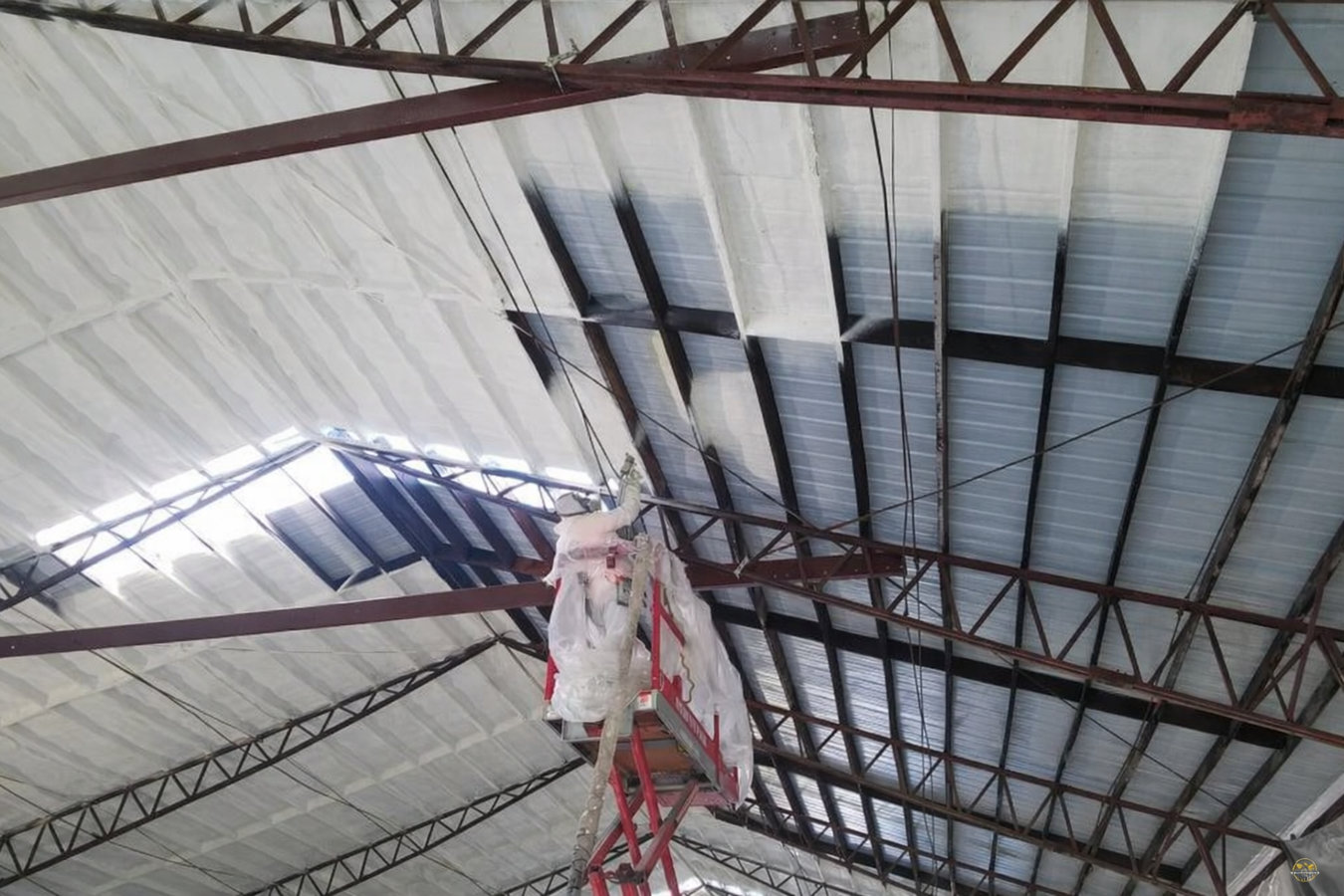
Flat and low-slope roofs - common on Halawa's older homes and small commercial buildings - are some of the best candidates for closed-cell spray foam applied to the underside of the roof deck. The foam bonds directly to concrete or wood decking, seals air gaps, and resists the moisture that accumulates in low-slope roof assemblies in Hawaii's humid climate. It also adds structural rigidity to older roof assemblies that may have shifted over the decades.
Halawa's proximity to Pearl Harbor means salt air is a constant factor, and over 50 to 70 years it works into caulking, wall penetrations, and gaps around windows and doors on older homes. Air sealing closes those entry points before they allow warm, humid outdoor air into the living space. We use blower door testing to identify exactly where air is leaking in homes throughout Halawa - a particularly useful tool in older CMU block construction where gaps are not always obvious visually.
For Halawa homes with concrete block walls that were never insulated, blown-in insulation injected through small drilled holes reaches interior wall cavities without opening up drywall or exterior finishes. The holes are patched and painted after the job. This is the least disruptive way to add wall insulation to a CMU home that has been finished inside and out - and it makes a meaningful difference in how consistently comfortable rooms feel throughout the day.
Halawa's housing stock is among the oldest in central Oahu. Most homes were built between the 1950s and 1970s to serve workers and military families near Pearl Harbor, and they were constructed in an era when insulation was an afterthought rather than a code requirement. Concrete masonry unit block construction - the dominant building method here from that period - provides thermal mass but very little actual insulation value. Flat and low-slope roofs, which are widespread throughout the neighborhood, absorb direct sun across their entire surface and conduct that heat straight into living spaces below. Hawaii's year-round heat and humidity mean there is no cool season that allows these homes to reset. The combination of aging building stock, minimal original insulation, and a climate that demands air conditioning nearly every day makes Halawa one of the higher-impact areas for insulation upgrades on Oahu.
Termites are a specific concern in Halawa that shapes how insulation work is approached in older homes. Hawaii has some of the most aggressive termite populations in the United States, and homes with wood framing or roof trusses from the 1950s and 1960s may have had termite activity at some point. Before adding insulation to an attic or wall cavity, a contractor working in this area should inspect for damage that could change the scope of the job. Halawa is also close enough to Pearl Harbor that salt air from the harbor and the open ocean beyond accelerates wear on exterior building materials - caulking, metal fasteners, and window seals on older homes need regular attention to prevent the air leaks that undermine whatever insulation is in place.
Our crew works regularly on the postwar CMU block homes that dominate Halawa's residential streets - a construction type that requires different techniques and materials than the wood-frame homes more common in newer Hawaii communities. Permits for Halawa projects go through the City and County of Honolulu Department of Planning and Permitting, the same office that handles all of Oahu's unincorporated communities. We always inspect for termite evidence before starting attic or wall work in Halawa - finding damage after insulation is installed is far more costly than addressing it first.
Halawa sits right off the H-1 freeway, which makes it one of the most accessible communities on Oahu for scheduling and logistics. Aloha Stadium - one of the most recognized landmarks in this part of the island - is the area's defining public building, and the Pearl Harbor National Memorial is just south of the neighborhood. Kamehameha Highway runs along the community's edge and connects Halawa to nearby areas. Neighboring Aiea is one of the communities we work in most frequently alongside Halawa - the hillside homes there share many of the same postwar construction characteristics and insulation needs.
To the east, we also serve homeowners throughout Pearl City, where a similar mix of postwar and mid-century housing stock gives us steady work on attic insulation upgrades and air sealing projects. The H-1 access from Halawa makes reaching both communities straightforward for our crews.
We ask a few quick questions about your home or building - when it was built, what you are noticing, and whether you have had any previous insulation work done. We respond within 1 business day and schedule the site visit at your convenience.
We visit the property, inspect the attic, wall cavities, and roof assembly, and check for any termite damage or moisture issues that should be addressed before insulation goes in. You receive a written estimate that itemizes scope, materials, and total cost - with no obligation to proceed.
For commercial insulation work or projects that require a permit, we handle the Honolulu DPP application on your behalf. We also confirm Hawaii Energy rebate eligibility before any work begins - this step must happen first, or the rebate is forfeited. We manage the documentation so you do not have to.
Most residential jobs in Halawa complete in one to two days. Commercial projects may run longer depending on the size of the building. Before the crew leaves, we walk you through what was done and answer questions. Commercial clients also receive documentation suitable for permit closeout and any energy program reporting.
We serve Halawa and all of central Oahu. Free written estimates for residential and commercial projects, experienced crews familiar with postwar CMU construction, and 1 business day response guaranteed.
(808) 809-8779Halawa is a small, tight-knit community in the Ewa District of central Oahu, sitting just north of Pearl Harbor and right off the H-1 freeway. With around 14,000 to 15,000 residents, it is primarily residential with very little commercial development of its own - Aloha Stadium, which has hosted NFL Pro Bowls and University of Hawaii football for decades, is the community's most recognized landmark. The housing stock is predominantly single-family detached homes built between the 1950s and 1970s, with the postwar character and concrete block construction common to that era on Oahu. A significant portion of residents have military or civilian ties to the nearby Joint Base Pearl Harbor-Hickam, giving the neighborhood a stable, long-term ownership profile.
Pearlridge Center, one of Hawaii's largest shopping malls, sits just over the community's border in neighboring Aiea and serves as the main commercial anchor for daily errands. The Pearl Harbor National Memorial is just south, and the Aloha Stadium Swap Meet - a long-running open-air market in the stadium parking lot that residents across Oahu have visited for generations - is as local as it gets in Halawa. The hillside community of Aiea borders Halawa directly and is one of the areas where we work most frequently alongside this neighborhood. Further west along the H-1 corridor, we also serve Waipahu, where a different mix of housing eras and construction types keeps our crews busy year-round.
Expands to seal gaps and create an airtight thermal barrier in walls, roofs, and crawl spaces.
Learn moreReduces heat gain and energy loss through the attic with professional installation.
Learn moreLoose-fill material blown into attics and wall cavities for thorough, even coverage.
Learn moreSafe removal of old, damaged, or contaminated insulation before new installation.
Learn moreInsulates beneath your home to improve comfort and prevent moisture-related issues.
Learn moreImproves interior comfort and energy efficiency by insulating exterior and interior walls.
Learn moreSeals drafts and air leaks to maximize the effectiveness of your insulation.
Learn moreKeeps basement spaces conditioned and protected from moisture infiltration.
Learn moreHigh-density spray foam offering superior R-value and moisture resistance.
Learn moreLightweight, flexible spray foam ideal for interior walls and sound dampening.
Learn moreInsulation solutions for commercial buildings, warehouses, and retail spaces.
Learn moreHeavy-duty plastic sheeting installed to block ground moisture in crawl spaces.
Learn morePrevents moisture intrusion in walls, floors, and foundations throughout your home.
Learn moreTargets attic bypasses and penetrations to stop conditioned air from escaping.
Learn moreAdds insulation to existing structures without major renovation or disruption.
Learn moreServing these cities and communities.
Call Honolulu Insulation today for a free written estimate on commercial or residential insulation in Halawa. Experienced crews, 1 business day response, and experience with the postwar construction that defines this neighborhood.