Loading...
Serving East Honolulu, HI and surrounding areas. (808) 809-8779
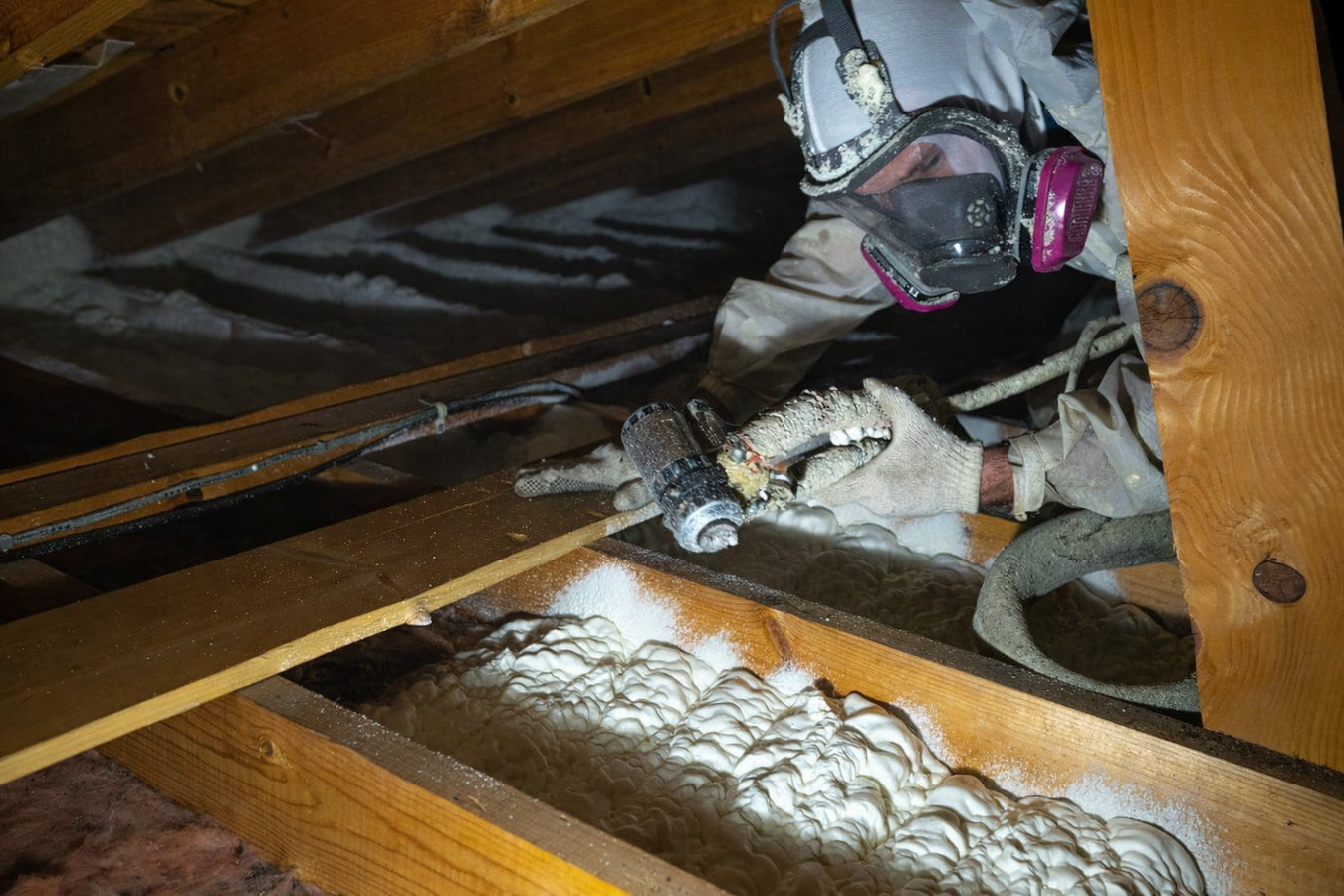
Honolulu Insulation serves Kailua homeowners with attic air sealing, spray foam, and blown-in insulation - blocking the rain, salt air, and high humidity that the windward side of Oahu delivers year-round, with experienced crews and free written estimates on every job.
Kailua sits on the windward side of the Ko'olau Mountains, where trade winds push moist air against homes with consistent pressure throughout the year. Proper attic air sealing closes the gaps around light fixtures, plumbing penetrations, and ceiling hatches that let that warm, humid air push into your cooled living space - the step that makes insulation work as designed.
Kailua's postwar single-family homes, many built in the 1950s through 1970s on the flat residential grid near Kawainui Marsh, typically have attic framing that makes standard batt installation difficult. Blown-in loose-fill covers every corner and fills around obstacles, delivering the consistent depth that keeps afternoon heat from radiating down through ceilings.
Kailua is less than a mile from the ocean in most neighborhoods, and the salt air here deteriorates exterior building materials faster than anywhere inland on Oahu. Spray foam expands to fill every gap, creating a continuous air and moisture barrier that holds up in the coastal salt-air conditions Kailua homeowners deal with year-round.
Kailua's flat terrain means many residential lots have minimal natural drainage, and standing water near foundations after heavy rain is common - particularly in neighborhoods near the Kawainui and Hamakua Marsh channels. A vapor barrier under the floor of a pier-and-beam home stops ground moisture from migrating up into insulation, subfloor framing, and lower wall cavities.
UV intensity at Kailua's latitude breaks down roofing materials and degrades older attic insulation faster than most homeowners realize - a job that might last 20 years in a northern climate may need reassessment in 10 years here. Homes from the 1960s in neighborhoods from Lanikai to the streets near Enchanted Lake often have compressed or absent original material that no longer performs.
Concrete masonry unit (CMU) block construction is common throughout Kailua's older neighborhoods, and those walls require a different insulation approach than wood framing. We work with both CMU and wood-frame construction, assessing each home's wall type before recommending a method rather than applying a one-size approach that doesn't fit the building.
Kailua sits on the windward side of the Ko'olau Mountains, which makes it one of the wettest parts of Oahu. Annual rainfall averages between 30 and 50 inches depending on how close a neighborhood is to the mountains, and wet-season storms can drop several inches in a single day. That moisture keeps yards lush but also means homes here deal with mold, mildew, and water intrusion at a rate that drier parts of Oahu simply don't see. For a postwar home that was built without vapor barriers, sealed attic penetrations, or humidity-appropriate insulation materials, Kailua's windward climate is actively working against the building every day. Contractors who bring mainland assumptions about how insulation performs will miss what this specific environment requires.
At the same time, Kailua is a community where homes are worth protecting. Median home values here are well above a million dollars, and most residents are long-term owner-occupants who invest in their properties. Homes built in the 1950s through 1970s - which describes most of Kailua's residential grid - have had decades of salt air, UV exposure, and windward humidity working on their building materials. Add in the fact that Hawaii's residential electricity rates rank among the highest in the country, and the financial case for getting insulation right in Kailua becomes straightforward: every gap sealed and every inch of insulation added directly reduces what homeowners pay Hawaiian Electric each month.
We pull permits through the City and County of Honolulu Department of Planning and Permitting, which handles all building approvals for Kailua. The homes we work on here are predominantly the postwar single-story and two-story houses on the flat residential grid that developed in the 1950s through 1970s - a mix of wood-frame and concrete block construction with carports, low-pitched roofs, and open floor plans that predate modern energy standards. Working on the windward side of Oahu means accounting for more rainfall and higher sustained humidity than we see in communities on the leeward side, and we adjust our material choices accordingly.
From the beach-adjacent streets near Kailua Beach Park to the neighborhoods backing up toward the Kawainui Marsh, we know that salt-air exposure is more aggressive on homes closer to the water and that flat lots near the marsh have drainage and moisture challenges that homes further from it don't share. We also serve homeowners in neighboring Kaneohe just north of Kailua, and in East Honolulu on the other side of the Ko'olau ridge, so we can help if your family spans both sides of the mountains.
Call us or submit through the contact form and we will respond within one business day. We will ask a few basic questions about your Kailua home - its age, the areas you want to address, and any comfort problems you have noticed - so we can come prepared with the right equipment and realistic expectations.
We come to your home and inspect the attic, crawl space, or wall areas in question. For Kailua's windward homes, that means looking at ventilation, moisture, and the condition of any existing material before recommending anything. The assessment is free, takes about an hour, and comes with no obligation to book. This is also a good time to ask whether any permits apply to your project.
After the assessment you receive a written estimate covering the recommended work, materials, and total cost - including any air sealing, removal of existing material, or permit fees. We walk you through it in plain language. Cost anxiety is normal, and if the number doesn't work for your budget, we would rather have that conversation now than after you have signed anything.
On the work day, the crew seals air gaps first, then installs the insulation material. Most Kailua jobs finish in a single day. Before leaving, the crew lead walks you through what was done - with photos of the finished attic - and answers any remaining questions. There is no curing or drying period with blown-in material, so you feel the benefit within a day or two.
We serve Kailua and the surrounding windward communities - free estimates, experienced crews, and a written scope before any work begins.
(808) 809-8779Kailua is a coastal town on the windward side of Oahu with a population of about 36,000 people. It is one of the most desirable residential communities in Hawaii, anchored by Kailua Beach Park, widely regarded as one of the finest beaches on Oahu - a long stretch of white sand and calm water that draws residents and visitors alike. Median home values here are well above a million dollars, and most residents are long-term owner-occupants with a strong culture of home maintenance. The town's flat residential grid developed primarily in the 1950s through 1970s, giving Kailua a neighborhood character of modest single-story and two-story homes on compact lots - many with carports, low-pitched roofs, and open floor plans suited to the tropical climate. A notable portion of homes are used as vacation rentals, which creates a secondary market for quick-turnaround maintenance and upgrade work alongside the full-time resident base.
Kailua's building stock is defined by concrete masonry unit (CMU) block construction and wood-frame homes built side by side, both typical of Hawaii construction from that era. The town is bisected by the Kawainui Marsh, the largest wetland in Hawaii, which sits in the middle of the residential area and contributes to the drainage challenges many nearby homeowners experience after heavy rain. Lanikai, the small upscale beach neighborhood just south of Kailua, shares many of the same building characteristics and insulation needs. To the north, Kaneohe is Kailua's closest neighbor on the windward coast and faces nearly identical climate and housing conditions. Across the Ko'olau ridge, East Honolulu is a short drive through the tunnels and a community where many Kailua families also have ties.
Expands to seal gaps and create an airtight thermal barrier in walls, roofs, and crawl spaces.
Learn moreReduces heat gain and energy loss through the attic with professional installation.
Learn moreLoose-fill material blown into attics and wall cavities for thorough, even coverage.
Learn moreSafe removal of old, damaged, or contaminated insulation before new installation.
Learn moreInsulates beneath your home to improve comfort and prevent moisture-related issues.
Learn moreImproves interior comfort and energy efficiency by insulating exterior and interior walls.
Learn moreSeals drafts and air leaks to maximize the effectiveness of your insulation.
Learn moreKeeps basement spaces conditioned and protected from moisture infiltration.
Learn moreHigh-density spray foam offering superior R-value and moisture resistance.
Learn moreLightweight, flexible spray foam ideal for interior walls and sound dampening.
Learn moreInsulation solutions for commercial buildings, warehouses, and retail spaces.
Learn moreHeavy-duty plastic sheeting installed to block ground moisture in crawl spaces.
Learn morePrevents moisture intrusion in walls, floors, and foundations throughout your home.
Learn moreTargets attic bypasses and penetrations to stop conditioned air from escaping.
Learn moreAdds insulation to existing structures without major renovation or disruption.
Learn moreServing these cities and communities.
We serve Kailua homes from the beach streets to the Ko'olau foothills - call or contact us to schedule your free on-site assessment.