Loading...
Serving East Honolulu, HI and surrounding areas. (808) 809-8779
Honolulu Insulation serves Waipahu with retrofit insulation, attic insulation, and blown-in wall insulation - upgrading homes from plantation-era wood frames to 1970s concrete block to newer townhomes, with experienced crews and free written estimates for every job.
Waipahu has a wider range of home ages than almost anywhere else on Oahu - from plantation-era houses built in the 1920s to townhomes finished just a few years ago. Our retrofit insulation service meets each home where it is, adding insulation to existing attics, walls, and floors without full demolition, using the method that fits the specific construction of your home.
Many of Waipahu's older homes were built with little or no attic insulation, and what little existed has had decades of Hawaii heat and humidity to degrade it. The attic is typically the single biggest source of heat gain in a home, so upgrading it delivers the most immediate improvement to comfort and to the monthly HECO bill.
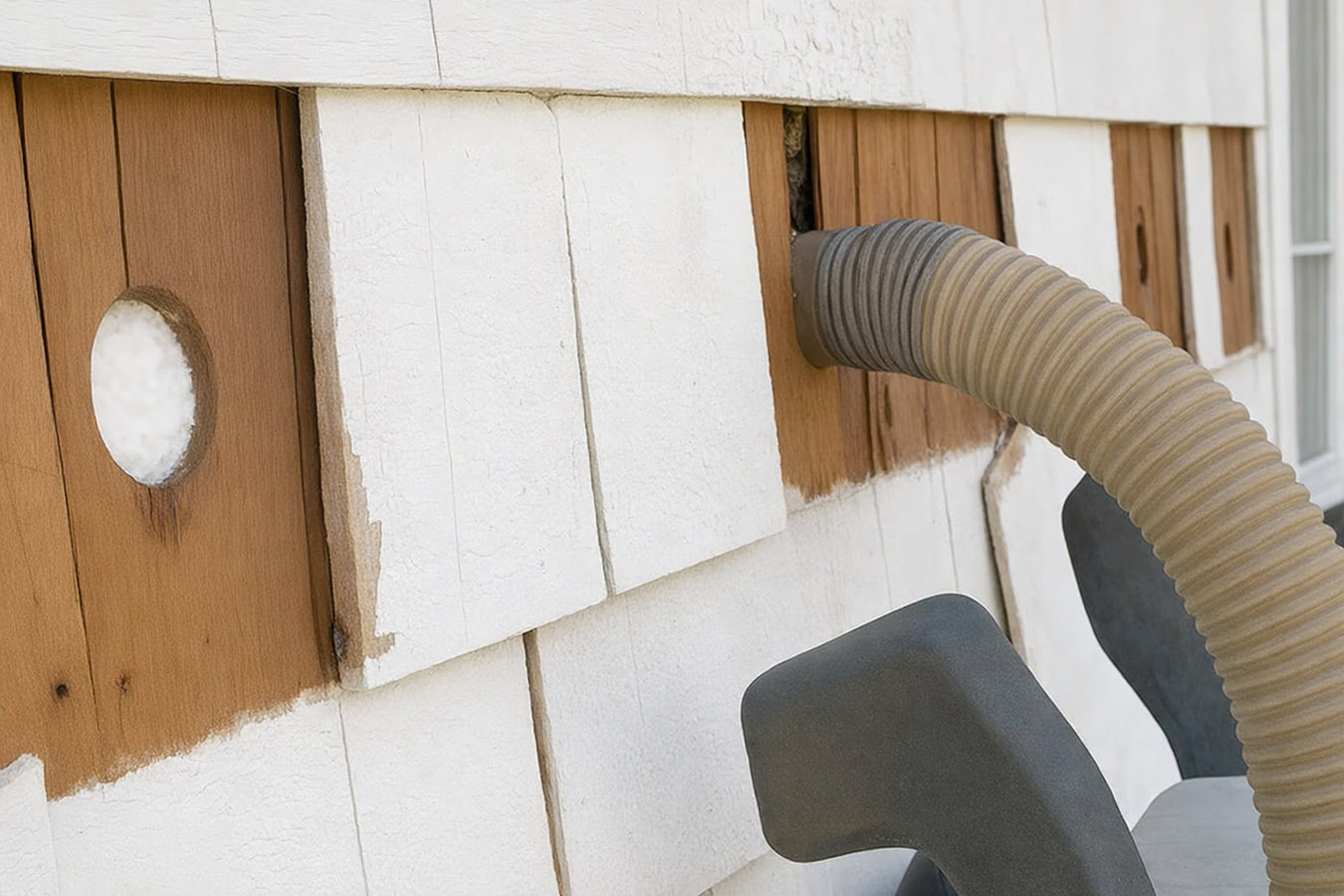
Waipahu homes that have been added onto or converted over the years often have wall cavities with unusual framing - original construction that was extended or modified at different times. Blown-in insulation fills these irregular spaces more completely than rigid batts, making it the practical choice for the modified homes common throughout this community.
Waipahu sits in a hot, humid climate where uninsulated walls let warm outdoor air push steadily into your cooled living space throughout the day. Whether your home has wood-frame or concrete block walls, we can assess what insulation is achievable and recommend the most cost-effective approach to cutting that heat gain without a full interior renovation.
For Waipahu homes with significant gaps around plumbing penetrations, attic hatch edges, or areas where multiple construction eras meet, spray foam seals and insulates in a single pass. It is particularly useful in older homes where the framing has shifted over decades and standard batt insulation would leave gaps that reduce the overall effectiveness of the upgrade.
Older homes in Waipahu accumulate air leaks over decades - around electrical boxes, behind baseboards, and at the tops and bottoms of wall cavities where the framing meets the floor or ceiling. Air sealing those paths before insulation goes in is what separates a job that makes a noticeable difference from one that barely moves the needle on your energy bill.
Waipahu has a housing stock that spans more than a century, from plantation-era wood-frame cottages built in the 1920s near the old sugar mill to concrete block homes from the 1960s and 1970s to townhome developments completed in recent years. This range creates a practical challenge for insulation work: the right approach for a postwar CMU block home is different from what works in a 1950s wood-frame house or a 2000s townhome with shared walls. A contractor who does not understand the difference will apply a generic solution that may miss the main sources of heat gain entirely. Waipahu also sits in a hot, humid part of Oahu where daytime temperatures stay in the mid-80s most of the year and humidity rarely drops low enough to feel comfortable without air conditioning.
Hawaii has the highest residential electricity rates in the United States, and Waipahu homeowners running air conditioning most of the year against under-insulated walls and attics are paying the price every month. Termite pressure in this climate is severe year-round - the University of Hawaii CTAHR termite research documents hundreds of millions in annual damage across the islands - and wood-frame homes with damaged framing cannot hold insulation properly until the structural issues are resolved. Getting insulation right in Waipahu means assessing the specific home first, not just adding material without understanding what is already there.
We pull permits through the City and County of Honolulu Department of Planning and Permitting, which handles all building approvals for Waipahu. The homes we encounter here are genuinely varied - a single street in the older part of town can have a 1940s plantation cottage, a 1970s concrete block ranch, and a newer townhome within a few lots of each other. We also regularly work on homes where previous owners added rooms, converted garages, or built accessory units, which means the insulation situation inside any given wall or attic can reflect several different eras of construction. We come ready for that complexity rather than expecting every job to look the same.
Waipahu is a community with a strong sense of place. Most locals know the area by the Hawaii Plantation Village museum on Waipahu Street, which preserves the plantation camp life that shaped this community, and by Waikele Premium Outlets on the edge of town, which draws shoppers from across Oahu. Waipahu High School has been a community anchor since 1950. Whether we are working on a home near the older neighborhoods around the plantation village or out toward the newer streets near Waikele, we know this part of central Oahu well.
We also serve homeowners in neighboring Ewa Gentry to the southwest and in Pearl City to the east, so if you are anywhere along this corridor on central Oahu we are familiar with the homes in your area and can schedule an assessment promptly.
Call or message us and we will get back to you within 1 business day. We will ask for your address, your home's approximate age, and what has been prompting you to look into insulation - hot rooms, high bills, or something else. Older homes in Waipahu can have unusual construction, so that context helps us arrive prepared for the assessment.
We visit your Waipahu home at no charge and inspect the attic, walls, and any crawl spaces. For older homes we also look for signs of moisture or structural issues that could affect the insulation work - things worth knowing before a job starts, not after. You will receive a written estimate that covers exactly what we recommend and what it costs, including whether a permit is needed.
The estimate spells out the method, materials, and total cost. We explain why we are recommending the approach we are - which matters in Waipahu because the right choice for a 1960s concrete block home is different from what works in a newer wood-frame house. Ask questions until the plan is clear; we would rather spend ten minutes explaining than have you uncertain about what you are agreeing to.
Our crew arrives on schedule, protects your home during the work, and finishes cleanly. We walk through the completed job with you before leaving and provide documentation of what was installed - useful if you plan to apply for utility rebates or federal tax credits. If anything seems off in the weeks after the job, call us and we will come back to look.
We work on every era of home in Waipahu - from plantation-era wood frames near the old sugar mill to the newer townhomes out near Waikele. Free written estimates, no pressure, experienced local crews.
(808) 809-8779Waipahu is a community of about 38,000 people in the Ewa District of central Oahu, roughly 16 miles west of downtown Honolulu. The community grew up around the Oahu Sugar Company, which operated a large plantation here from the 1890s until it closed in 1995. That history is still visible in the older parts of town, where compact plantation-era cottages sit alongside postwar concrete block ranches and newer developments. Housing here is a genuine mix - single-family detached homes, attached townhomes, and apartment complexes - with about half of units owner-occupied and many multigenerational households that have expanded their homes over the decades with additions and converted spaces. The diversity of the community is reflected in the range of Filipino, Japanese, Native Hawaiian, and Pacific Islander residents who make up Waipahu's population.
Waipahu sits just north of Pearl Harbor, with easy access to Joint Base Pearl Harbor-Hickam and the commercial corridor along Farrington Highway. The Skyline rail line, which opened its first segment in 2023, includes a station near Waipahu and is gradually extending toward downtown Honolulu. Most residents know the community by its institutions: the Hawaii Plantation Village on Waipahu Street, Waipahu High School, and Waikele Premium Outlets on the eastern edge of the community. Neighbors in Ewa Gentry to the southwest and Pearl City to the east face similar central Oahu climate conditions, and we serve all of those communities regularly.
Expands to seal gaps and create an airtight thermal barrier in walls, roofs, and crawl spaces.
Learn moreReduces heat gain and energy loss through the attic with professional installation.
Learn moreLoose-fill material blown into attics and wall cavities for thorough, even coverage.
Learn moreSafe removal of old, damaged, or contaminated insulation before new installation.
Learn moreInsulates beneath your home to improve comfort and prevent moisture-related issues.
Learn moreImproves interior comfort and energy efficiency by insulating exterior and interior walls.
Learn moreSeals drafts and air leaks to maximize the effectiveness of your insulation.
Learn moreKeeps basement spaces conditioned and protected from moisture infiltration.
Learn moreHigh-density spray foam offering superior R-value and moisture resistance.
Learn moreLightweight, flexible spray foam ideal for interior walls and sound dampening.
Learn moreInsulation solutions for commercial buildings, warehouses, and retail spaces.
Learn moreHeavy-duty plastic sheeting installed to block ground moisture in crawl spaces.
Learn morePrevents moisture intrusion in walls, floors, and foundations throughout your home.
Learn moreTargets attic bypasses and penetrations to stop conditioned air from escaping.
Learn moreAdds insulation to existing structures without major renovation or disruption.
Learn moreServing these cities and communities.
We serve Waipahu homeowners in every era of home, from the oldest streets near the plantation village to the newest developments near Waikele. Call today or submit your address and we will get back to you within 1 business day.