
Loading...
Serving East Honolulu, HI and surrounding areas. (808) 809-8779
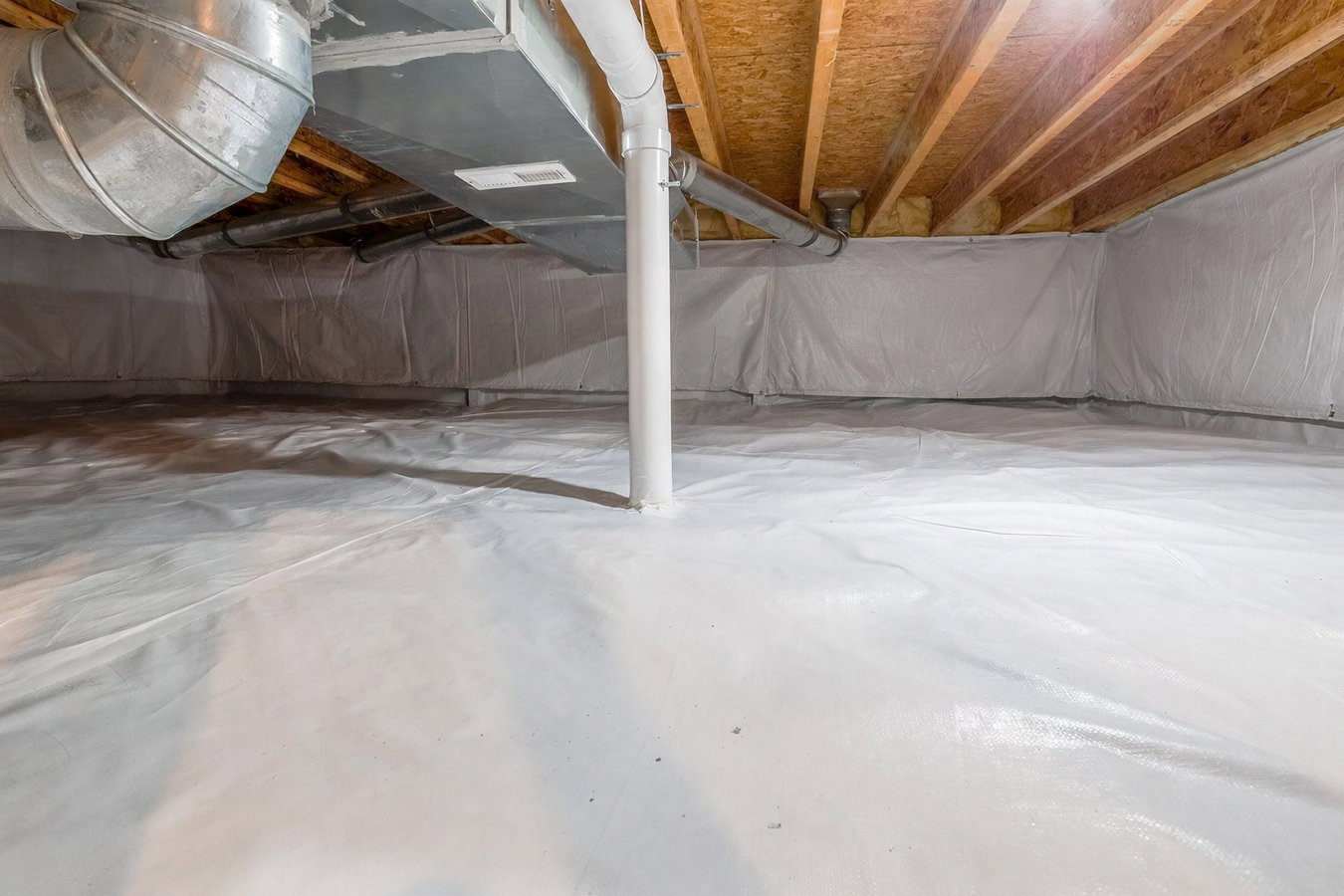
Moisture from the ground and walls quietly damages floors, insulation, and wood framing over time. The right barrier stops it at the source so your home stays dry and your structure stays solid.
Vapor barrier installation in East Honolulu places heavy-duty plastic sheeting in your crawl space, under a slab, or in wall and utility areas to block moisture from moving through your home's structure - most single-family jobs are complete in one to two days. The barrier is rolled out, seams overlapped and taped so there are no gaps, and edges secured to walls so moisture cannot find an entry point around the edges.
In East Honolulu, where the ground stays wet from trade-wind rainfall and humidity stays high year-round, moisture has constant pressure to move upward into your floors and walls. Homes built before the 1990s - and many in Hawaii Kai, Aina Haina, and Niu Valley were - often went up without any moisture barrier at all, or with thin plastic that has since cracked and pulled away. By the time a homeowner notices soft floors, a musty smell, or mold at the base of walls, the moisture has usually been working its way in for years. Pairing vapor barrier work with attic air sealing addresses moisture and air leakage at both ends of the home - a practical combination for older East Honolulu houses.
The EPA's guidance on moisture control and indoor air quality explains the relationship between ground vapor and indoor air clearly. You can review their recommendations at the EPA Indoor Air Quality - Moisture Control page.
A damp, earthy odor in your living areas - especially strongest in the morning or after heavy rain - often comes from ground moisture moving up through an unprotected crawl space. In East Honolulu, where Ko'olau rainfall keeps the soil consistently wet, this smell tends to develop faster and be stronger than homeowners expect. It is one of the earliest signs that moisture is already affecting your floor structure.
Wood floors that feel spongy underfoot or that have started to warp or buckle near the edges are often reacting to moisture coming up from below. This is especially common in older East Honolulu homes with raised post-and-pier floors, where ground vapor has direct access to the wood structure. If you press on a soft spot and it gives slightly, the subfloor may already be absorbing moisture - and the process does not stop on its own.
Mold appearing at the base of interior walls - in bathrooms, utility rooms, or rooms that face the hillside - is a sign moisture is entering from below or through the wall base. East Honolulu's rainfall patterns make hillside-facing walls and ground-level spaces particularly vulnerable. Even small patches of mold at floor level are worth investigating promptly - mold spreads in Hawaii's warm, humid climate faster than in most mainland regions.
Many mid-century homes in East Honolulu were built without vapor barriers, or with thin plastic that has since degraded or been disturbed by pest control or plumbing access. If your home is more than 40 years old and you have never had a vapor barrier inspection, the protection under your home may be inadequate or missing entirely. This is worth confirming even without obvious visible symptoms - moisture damage is often well advanced before it becomes easy to see.
We install vapor barriers in crawl spaces, under slabs, and in utility and interior spaces where moisture is a persistent issue. Every installation covers the entire target surface - no gaps, seams overlapped and taped, edges secured to walls. For crawl spaces, we assess the full space before ordering materials: we check the size, look at the condition of any existing barrier, note where moisture is heaviest, and identify any areas around posts or pipes that need special attention. We also handle crawl space vapor barrier work as a dedicated service for homeowners focused specifically on ground-floor moisture protection.
If old or degraded material is already in place, we remove it before the new barrier goes in - sealing fresh sheeting over a torn or compromised surface leaves the weak points in place. We also coordinate with attic and wall insulation projects when homeowners want to address moisture and air leakage across the full envelope at once. East Honolulu's older post-and-pier homes benefit from a whole-home approach, and scheduling vapor barrier work alongside attic air sealing reduces both total cost and disruption compared to scheduling them as separate projects.
Suited to homes with open crawl spaces where ground moisture has direct access to the floor structure above.
Best for homes built on concrete slabs where moisture movement through the slab is affecting flooring or interior finishes.
For utility rooms, storage areas, or interior walls where persistent moisture is entering from an adjacent soil-contact surface.
For homes with existing plastic that has torn, degraded, or pulled away - we remove the old material before installing fresh sheeting.
East Honolulu does not have a dry season. The Ko'olau Range channels trade-wind rainfall toward the windward slopes of Oahu year-round, keeping the soil under homes in neighborhoods like Hawai'i Kai, Aina Haina, and Kuliouou consistently wet. Unlike most mainland climates where moisture problems ease up in winter, homes in East Honolulu are under constant moisture pressure every month. That means a vapor barrier here is working every single day rather than just during wet months - and the quality and completeness of the installation matter more than they would in a climate with seasonal relief. The volcanic soil that underlies much of the area also behaves differently from mainland sandy or clay soils, holding moisture unevenly and routing water in ways that can concentrate dampness in unexpected corners of a crawl space. Homeowners across Kailua and the east side of Oahu share these same windward moisture conditions.
The age of East Honolulu's housing stock adds to the urgency for many homeowners. A large portion of homes were built between the 1960s and 1980s using post-and-pier or raised-foundation construction that creates open crawl spaces with direct exposure to ground air and soil vapor. Many of those homes were built without any moisture protection at all. East Honolulu also has significant termite pressure - the Hawaii Department of Agriculture has documented the Formosan subterranean termite as one of the state's most destructive pests, and the damp conditions in an unprotected crawl space are exactly what draws them in. Residents throughout Honolulu face the same combination of older housing stock and persistent moisture that makes this service genuinely necessary rather than optional.
We ask about your home's age, foundation type, and what you have noticed. We reply within one business day and schedule a free in-person assessment. No commitment required to book the visit.
We inspect the crawl space or target area, check the size, access difficulty, and existing moisture conditions, and measure everything needed for an accurate quote. You get a written estimate that breaks down what the job includes before any work begins.
If mold remediation or old material removal is needed first, we handle or coordinate that before the new barrier goes in - sealing a compromised space is not how good work is done. We tell you upfront if any prep is required and why.
The crew rolls out the barrier, overlaps and tapes every seam, and secures the edges to the walls. Most East Honolulu homes are complete in one day. Before we leave, we walk you through the finished work and explain what to watch for over the next few weeks.
Free in-person assessment. Written quote before any work starts. No pressure to book on the spot.
(808) 809-8779Our crews install vapor barriers across East Honolulu every week and give you a written scope before any work starts. You know exactly who is coming to your home and what the job involves. Any contractor who hesitates to put the details in writing is a flag worth taking seriously.
We serve all 12 communities from East Honolulu through Kailua, Kaneohe, Pearl City, and Kapolei. That footprint means we understand the specific moisture, soil, and housing conditions in your neighborhood - not just crawl space work in the abstract. Local references from your area are available if you want them before deciding.
The edges and seams are where most vapor barriers fail. We overlap seams by at least a foot, tape them, and fasten the edges to the foundation walls on every job - not just the ones where we think moisture is worst. The Building Industry Association of Hawaii recognizes this attention to completeness as the difference between work that performs and work that needs to be redone.
You receive a written quote after the assessment that specifies the material thickness, coverage area, seam method, and what prep work - if any - is included. That document protects you. It also makes it easy to compare us honestly against other quotes, which we encourage. No reputable contractor should object to that.
A vapor barrier is work that happens under or behind your home - somewhere most homeowners cannot check easily after the fact. That is exactly why we walk you through the finished job before we leave and give you photos if you want them.
For permit information, contact the Honolulu Department of Planning and Permitting.
Air sealing at the attic level stops warm, humid air from moving into your home's thermal envelope from above - the other end of the moisture and air leakage problem.
Learn moreDedicated crawl space vapor barrier installation focused on complete ground coverage, sealed seams, and wall termination for homes with open crawl spaces.
Learn moreEast Honolulu's humidity does not stop - and neither does the moisture pressure on your home. Call today or request a free estimate and find out exactly what is happening under your floors.