
Loading...
Serving East Honolulu, HI and surrounding areas. (808) 809-8779
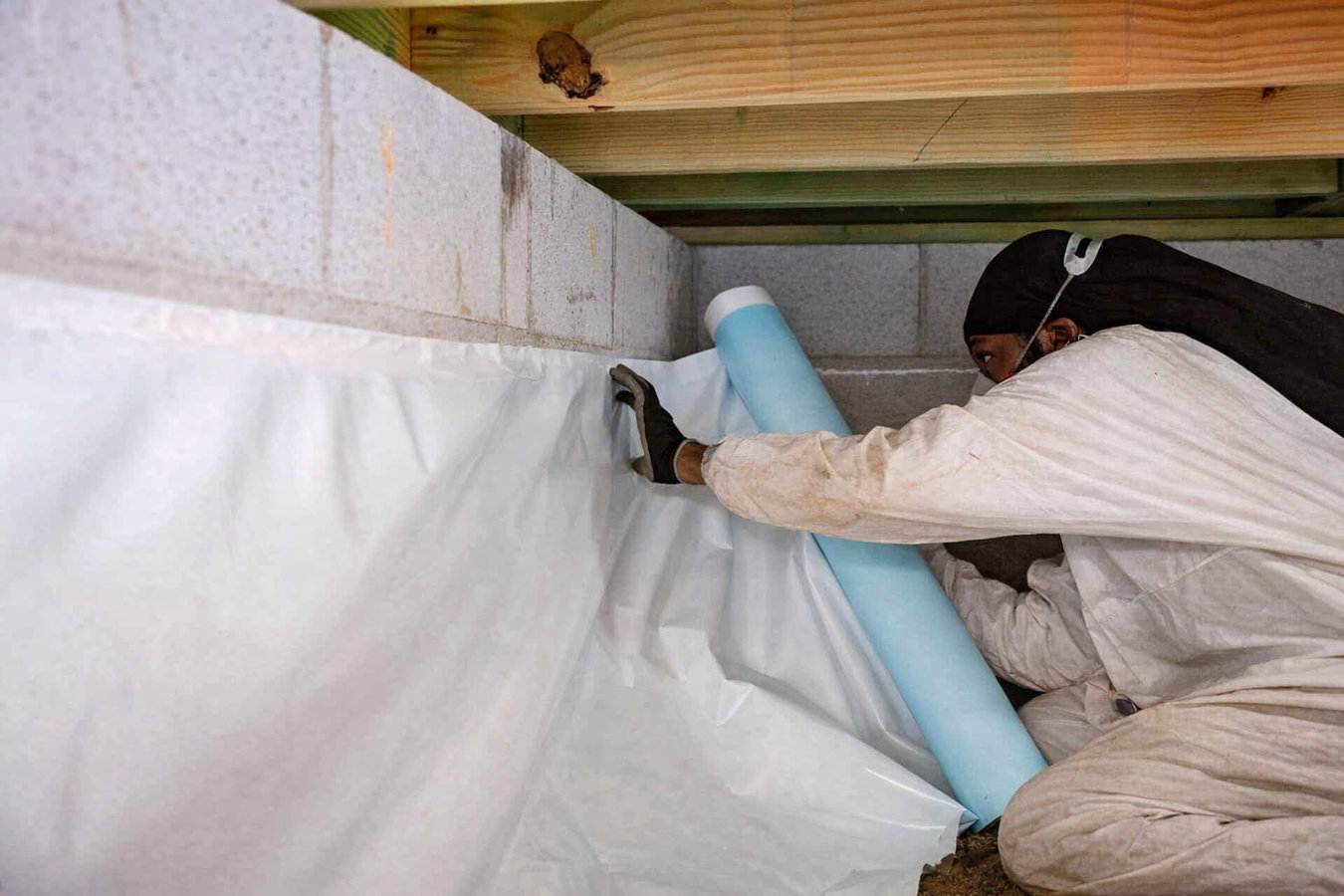
Ground moisture rises into your floors, walls, and air every day. A properly installed vapor barrier stops that cycle and protects the structure your home is built on.
A crawl space vapor barrier in East Honolulu is a thick plastic sheet installed across the entire ground surface of your crawl space to block soil moisture from rising into your home - most installations are complete in a single day. The barrier covers the bare soil completely, with seams overlapped and sealed and edges run up the foundation walls so there are no gaps for moisture to find.
In East Honolulu, where relative humidity stays high year-round and the soil under many homes is constantly releasing moisture, a crawl space without a barrier is a home working against itself every day. The damp air that collects under your floors does not just stay there - it moves into your floor joists, your insulation, and eventually into your living space. Many homeowners first notice the problem as a musty smell or rising electricity bills before realizing the source is under the floor. Pairing a vapor barrier with crawl space insulation gives you both moisture control and thermal protection in one project.
The U.S. Department of Energy and the Building Science Corporation both document the value of ground-cover barriers in humid crawl spaces. You can read about moisture control principles at the U.S. Department of Energy - Moisture Control resource.
A damp, earthy odor in your living areas - especially near the floor or after rain - often comes from moisture sitting in the crawl space below. In East Honolulu's humid climate, this smell can develop quickly and intensify after the Ko'olau Range channels heavy rainfall toward the neighborhood. It is easy to dismiss as normal for older Hawaii homes, but it is usually a sign that moisture is already affecting the wood and materials under your floors.
Walk slowly across your floors and pay attention to spots that feel softer than they should, or where there is a slight give underfoot. This can be an early sign that floor joists have absorbed moisture and started to weaken. In homes built in the 1960s and 1970s - common throughout East Honolulu - this kind of structural moisture damage can develop over years without any visible warning at the surface.
If anyone has looked into your crawl space and noticed water droplets on pipes, rust on metal fasteners, or dark staining on the wood, those are direct signs of a moisture problem. In East Honolulu's trade wind and rain environment, condensation under homes is common and often goes unnoticed until a pest inspector or plumber spots it during another job. Rust on fasteners means moisture has been present long enough to corrode steel.
Termites and other wood-destroying insects are drawn to damp wood, and Hawaii has some of the highest termite pressure in the country. If a pest inspection has flagged moisture-related activity near your foundation or floor framing, a vapor barrier is one of the first steps a good contractor will recommend alongside any treatment program. Reducing moisture under the house removes one of the main reasons pests are attracted there.
We install heavy-duty plastic sheeting across the entire crawl space floor - covering every inch of exposed soil, overlapping seams by at least a foot, sealing those seams with tape, and running the material up the foundation walls to close off the edges. The difference between a barrier that works and one that does not comes down to coverage, seam sealing, and edge fastening. We also handle vapor barrier installation for other areas of the home - including under slabs and interior utility spaces - where ground or wall moisture is a persistent problem.
Every project starts with a crawl space assessment before any materials are ordered. We enter the space, check the size and condition, look for standing water or mold, and confirm how accessible every corner is. If old or degraded plastic is already there, we remove it before laying the new barrier - sealing moisture over a compromised surface defeats the purpose. For homes where the crawl space also lacks insulation, we coordinate both scopes together. In the same way that crawl space insulation blocks heat and air movement, the vapor barrier stops moisture at the source, and the two together give your crawl space a level of protection it cannot get from either alone.
Suited to homes where the primary need is blocking soil moisture from rising into the crawl space without other structural changes.
Best for homes where the crawl space sees foot traffic for plumbing or pest control access and durability over many years is the priority.
Includes running the sheeting up foundation walls and securing the edges - the correct method for any home where the crawl space has open wall surfaces.
For homes with existing plastic that has degraded, torn, or pulled away - we remove the old material completely before installing new.
East Honolulu sits on the windward-facing slopes of the Ko'olau Range, which means it receives more rainfall and stays more humid than most of Oahu. Neighborhoods like Hawai'i Kai, Aina Haina, and Kuliouou get significant rainfall throughout the year, keeping the soil under homes wetter for longer than leeward areas. The volcanic soil in much of East Honolulu holds and channels water in ways that can be unpredictable - moisture can pool in some spots and move quickly through others, which means moisture levels under a home can vary considerably from one corner to another. A vapor barrier installed across the entire ground surface is the most practical way to address that variability. Homeowners throughout Kailua and the east side face the same windward moisture conditions, making this one of the most consistently needed services in the area.
A large share of East Honolulu's housing stock was built between the 1960s and 1980s, an era when crawl space moisture protection was not a standard part of construction in Hawaii. Homes from this period often have no barrier at all, or older plastic that has cracked and pulled away from the walls over the decades. Combined with Hawaii's well-documented termite pressure - the University of Hawaii Extension program notes that subterranean termites are drawn to the kind of damp conditions an unprotected crawl space creates - this makes vapor barrier installation one of the more practical and widely needed upgrades for East Honolulu homeowners. Residents across Honolulu deal with the same conditions, particularly in older neighborhoods with raised foundations.
We ask a few basic questions about your home's age, foundation type, and whether you've noticed any smells or moisture signs. We reply within one business day and schedule a free in-person assessment at a time that works for you.
A crew member physically enters the space, checks its size, condition, and access difficulty, and looks for standing water or mold. This takes 20 to 45 minutes. We walk you through what we found and give you a written quote before any work begins - no surprises.
The crew removes any debris and old material, rolls out heavy-duty sheeting across the entire floor, overlaps and tapes every seam, and secures the edges to the foundation walls. Most East Honolulu homes are done in four to eight hours. You do not need to vacate.
Before we leave, we show you the completed work and explain what to look for over the next few weeks. The musty smell, if you had one, typically fades within two to four weeks. If anything seems off, call us - we come back and check without any hassle.
Free crawl space assessment. Written quote before any work starts. No pressure to decide on the spot.
(808) 809-8779Our crews install vapor barriers across East Honolulu every week and give you a written scope before any work starts. You know exactly who is coming to your home and what the job involves - not just a business card and a handshake.
We serve all of East Honolulu and 11 surrounding areas including Kailua, Kaneohe, Honolulu, and Hawaii Kai. That local footprint means we understand the specific moisture and soil conditions in your neighborhood - not just crawl space work in general. References from your specific area are available on request.
We physically enter your crawl space before quoting anything. That inspection tells us the actual size, access difficulty, moisture level, and condition of any existing barrier. It also gives you a clear picture of what is under your home - in photos if you want them - before you spend a dollar. We verify the University of Hawaii's termite-moisture link findings in practice on every job.
A vapor barrier with unsealed seams or loose edges at the walls is not doing its full job. We overlap seams, tape them, and fasten the edges to the foundation walls on every installation - not just the ones where we think moisture is worst. That completeness is what separates a barrier that lasts from one that needs to be redone in a few years.
Every one of those points comes back to the same thing: a job done correctly the first time by a contractor you can verify before they start. That matters a lot when the work happens under your home where you cannot easily see it after the fact.
For permit questions, contact the Honolulu Department of Planning and Permitting.
Vapor barrier installation for slabs, utility spaces, and interior areas where ground or wall moisture enters beyond the crawl space.
Learn moreInsulation installed beneath floor joists or along crawl space walls to block heat gain and protect your floor structure from above the barrier.
Learn moreEast Honolulu's soil stays wet year-round. The sooner the barrier is in place, the less time moisture has to work into your home's structure. Call or get a free estimate today.